
Illustration by Irene Yoon/Special to Bear Witness
Originally published in print in October 2024. View print issues here.
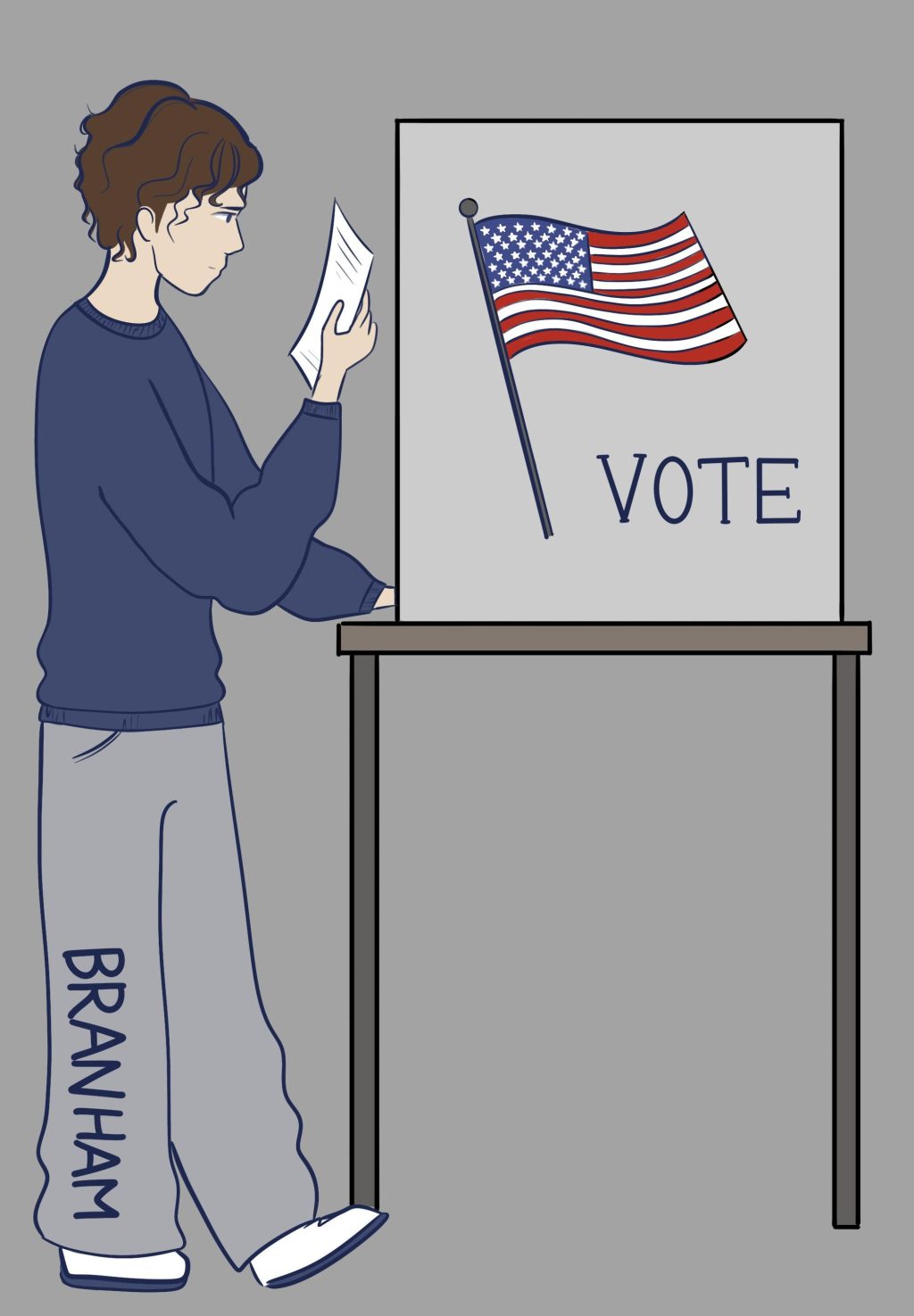
As the presidential election unfolds and Branham seniors reach the legal voting age, they have a new opportunity to voice their opinions in the 2024 presidential election.
According to Circle, a research organization on civic engagement in the United States, the 2022 Midterm Election had 27% of eligible voters between 18 and 29 years of age vote. As it was the second-highest turnout of the 21st century, there is a new realm of 18-year-olds now allowed to cast their vote.
AP United States Government and Politics teacher Kirk Selfridge highlights the importance of educating his students on political matters, including understanding the election process and the government.
In his class, he leads informative discussions about prominent issues in the political world. These issues are specifically affected in the election politically, thus wanting to have students understand their role as possible voters in the federal ballots.
“It is a way to get them connected and understand their role in making those [voting] decisions,” Selfridge said.
Not only has Selfridge found the discussions and curriculum of the government class beneficial and informative, but students have also realized the importance of learning about the democratic system. Senior Gautam Khajuria reflects on the impact this class has had on him.
“The way I used to understand politics before this class was a lot of what I’d see on the news and social media,” Khajuria said. “I didn’t completely understand how the government works and why things happen.”
In today’s digital age, social media has become a more prominent platform for those of younger ages, to access political information.
Senior Hailey Schlosser, a newly eligible voter, identifies how she can obtain information on politics.
“I don’t know much about our government. I only knew what the three branches were,” she said. “[In class we have] gone really into depth about how our government was created, and what each government represents.”
Schlosser acknowledges the opportunity to find information on social media platforms such as TikTok and Twitter. They abide by teenagers by making quick, attention-catching videos, even if the videos are not proven to be fully truthful. However, this can dictate how students feel and lead them to believe false information.
With the role of being a government teacher and seeing students exert their knowledge, Selfridge notes how the easy accessibility and interest teenagers acquire towards social media pulls them into these fast-paced, attention-grabbing videos.
“The one positive thing I can see from TikTok is it will get them thinking about a topic. I hope that whoever is sharing that information with them on TikTok that they don’t take that as being completely factual, and that they take that to do their research on it,” Selfridge said.
While it may not be seen as reliable, students are usually found looking to social media sites to obtain political information, as they fulfill a more light-hearted and accessible way of getting ideas. Although not able to vote, Khajuria has acknowledged the positive impact of the government class that all seniors are required to take.
As students step into adulthood, their knowledge strengthens, and now the option to have a political voice is granted. With the ability to become educated, students can morph their opinions and use this opportunity to vote.
“I’m just one person. I’m just one vote. But, one vote can make a difference,” Schlosser said.

 Branham Bear Witness
Leave a comment