
Originally published in print in December 2024. View print issues here.
The Israel-Hamas war in the Middle East continues to affect people globally, since the beginning of the war. Students at Branham affected by the conflict have continued to search for their cultures and find community.
Oct. 7, 2023, marked the beginning of the recent Israel-Hamas war when Hamas, a Palestinian military group occupying the Gaza Strip and West Bank, carried out a terrorist attack upon Israel on Shabbat, the weekly day of rest for the Jewish people. There have been over 1,500 Israelis and 44,000 Palestinians killed and 117,000 injured, according to the Gazan Health Ministry.
The 13-month war continues to escalate with Israeli forces killing the Hamas leader, Yahya Sinwar on Oct. 16, 2024. Sinwar took over after the previous leader, Ismail Haniyeh, was killed in July of this year. Throughout the war, civilian lives continue to be affected.
Junior Tamar Maysel, who grew up in Israel and moved to the United States at seven years old, experienced violence from the tensions between Israel and Hamas. As a child, she found herself constantly exposed to wake-up calls, urging her and her family to find bomb shelter.
Today, Maysel surrounds herself with those connected to Jewish roots, a comforting place during times of war at her home. Due to her Israeli heritage, Maysel is determined to foster a strong Jewish community, which she does so through being president of Jew Crew, Branham’s Jewish club, and being involved with B’nai Brith Youth Organization (BBYO).
“BBYO gives me a strong Jewish community, and I feel that [with] any problem I encounter, there’s someone there that I can talk to about it [with],” Maysel said. “Whether it’s something that happened at school or something I’ve encountered online, I know I have someone to rely on.”
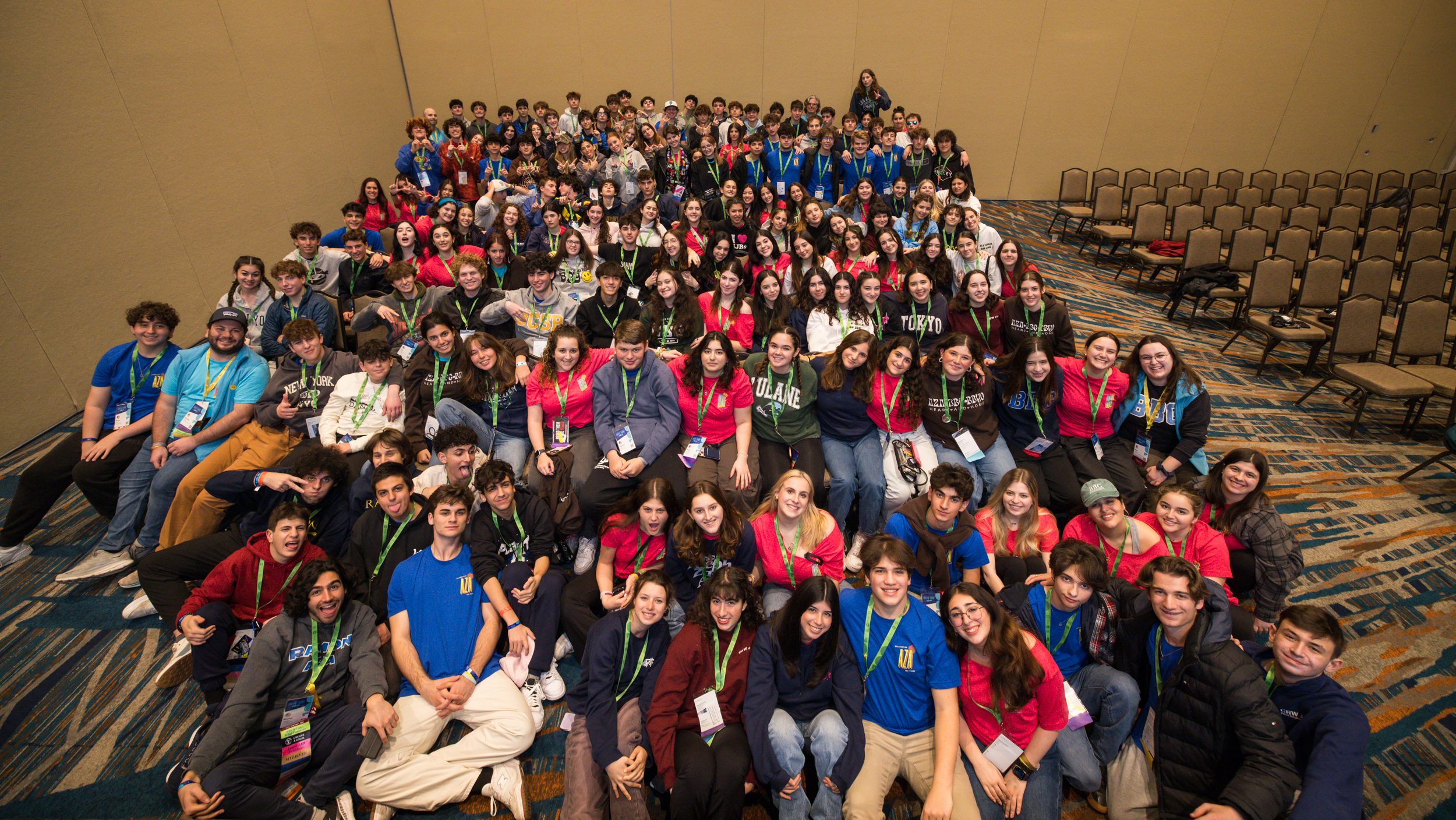
Junior Tamar Maysel and members of Central Region West (CRW), a Jewish teen movement throughout Northern California and the Bay Area, group together at a BBYO convention.
Maysel has been able to surround herself and engage with her Israeli and Jewish identity following her immigration to America. At Branham, she noticed the difficulty that Jewish people faced.
“We were facing a lot of discrimination,” Maysel said, “People were pointing fingers at us. People were laughing. Me and my co-president were appalled at the amount of anti-semitism.”
Following the beginning of the war, finding a community with shared experiences and a strong support system became more important, which Maysel was able to find through Jew Crew and BBYO.
Senior Avishawd Yarisaied has created similar groups, such as the Persian Club for Middle Eastern students, specifically those of Iranian descent, who are impacted by the war.
“I feel safe being a Persian at Branham,” Yarisaied said. “I feel very supported. Different Iranians and different students who were interested in learning about what’s going on and still is going on in Iran.”
Due to her personal connection to the war, creating a community at school is important for incorporating her culture outside of her home.
“I have a lot of family in Iran. I only have a small portion of my family here in California. I have family members that will be affected by the war,” Yarisaied said.
With Branham students having relationships to the conflict, either through family, ancestry or friends, the opportunity for students to educate themselves in a school setting is valuable. History teacher Madeline Fama senses the impact learning about global conflicts at school has on students.
“I can see both sides [of the conflict],” Fama said. “I’ve had students who are Palestinian and students who are Jewish. They both have very strong opinions. They feel certain ways about the topic. You have to make sure you’re respectful of their learning, but also give them a chance to learn about these things.”
The spread of hate speech across social media has become very present since the continuation of the conflict. Learning about the Israel-Hamas war at school offers various viewpoints and helps minimize the amount of harsh words and graphic images that can be seen online, allowing students to learn about the war transparently.
However, Maysel has noticed that people online tend to react quickly and impulsively as the news publishes stories about the conflict.
“No one has time to process anything. People think very irrationally. They just want to say what they want to say. They want someone to feel hurt by what they’re saying.” Maysel said.
Many people look to social media as a culprit of this, demonstrating the issues many Middle Eastern civilians are facing due to the war.
“Antisemitism, Islamophobia—the general discrimination that all of us are facing,” Maysel said. “It’s because of social media [where] all people hate on people. At this point, it’s really without a point. They’re hating on people to hate on people.”
Fama says it’s valuable to inform students about credible sources when researching complex topics such as the Israel-Hamas conflict.
“We as human beings tend to look for information that agrees with our bias,” Fama said. “We can’t help it, so in our class, when we [learn about] current events, I run them through a media bias chart. Social media is a big part of [students’ lives], but if you look at a new source, you can see where their bias lies.”
 Branham Bear Witness
Leave a comment