
Originally published in print in September 2025. View print issues here.
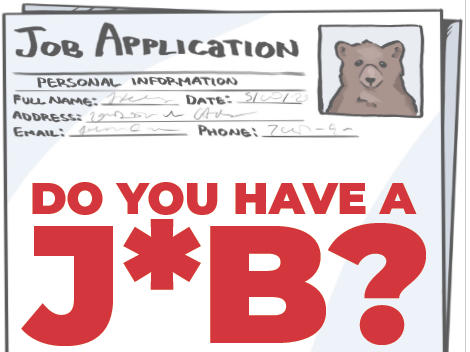
The “J word.” Jerk? Judgey? Junk? No, j*b. Between balancing schoolwork and the lack of job availability, Branham students are experiencing difficulty working while attending high school.
Due to recent uncertainty in the economy of the United States, it has become harder and harder for teenagers to find employment. With employers fearful of how new tariffs and economic turmoil will shake the market, the employment rate for 16 to 19-year olds has fallen to the lowest level it has been since the depths of the 2020 Coronavirus pandemic (USA Today).
Despite senior Ali Shabban’s efforts to apply to jobs in person and email management, he has heard little to nothing back.
“I’m always going inside the store itself and asking for a job,” said Shabban, who applied to CVS, TJ Maxx, Target and Panda Express. “They say to apply online, and then I apply. I usually never get a response back, but when I do, it’s one text. I follow up, and I never get anything scheduled.”
Additionally, junior Alex Wray, has experienced a similar situation to Shabban, searching for a job and seeing no results. Wray had applied to the Vineland Branch Library, located in San Jose after volunteering there in the past, however, he was not able to have a leg up when attempting to get a job there.
“[The application was a] few questions of really basic level stuff. It was, ‘Can you lift heavy boxes? Can you sort? Can you clean?’” Wray said. “I was like, ‘Yeah, I can do all that stuff.’ So why did they reject me if it was such easy stuff?”
In comparison, junior Kasey Fagin has not faced much difficulty as she got a job as a hostess at Giorgios, an Italian restaurant in Willow Glenn. Fagin, who had connections to the restaurant, got the job on the spot.
“One of my friends had the job, so I talked to her about it, and she got me an interview,” Fagin said. “Then I went in and got interviewed by the boss, and then I did my application and I joined.”
Guidance counselor Isabel Magana notes the difficulties high school students face in the job market, as they are limited by labor laws that limit the number of hours students can work and the age at which they can begin to work.
“Many entry-level jobs that once hired high school students are now filled by adults — for example, college students who have a more flexible schedule — whereas high school students need to find a job that is available after school or on the weekends,” Magana said.
Shabban, faces difficulty when applying as he is wanting to participate in extracurricular activities, and attempting to fit in all of his priorities.
“Every time I apply for a job, I have a really messed up schedule. Over the summer, I really had only mornings and Saturdays and Sundays because I played football,” Shabban said. “I play sports all year round, so I can’t really find any job that has only Saturdays and Sundays that are off so that might be a big issue.”
While many may wonder how beneficial teenage employment is, teens themselves have recognized the positive impact it can have on them.
With the desire and pressure to balance everything academically, it can be frustrating to experience rejection while trying to balance the responsibilities of school, work and sports.
“Every time I apply for a job, I have a really messed up schedule. Over the summer, I really had only mornings and Saturdays and Sundays because I played football,” Shabban said. “I play sports all year round, so I can’t really find any job that has only Saturdays and Sundays that are off so that might be a big issue.”
Networking early can be beneficial for the future, according to Fagin.
“Having connections is key,” Fagin said. “[If] you don’t have a connection, you can look online. I know that’s how most people get jobs.”


 Branham Bear Witness
Leave a comment