
Originally published in print in November 2025. View print issues here.
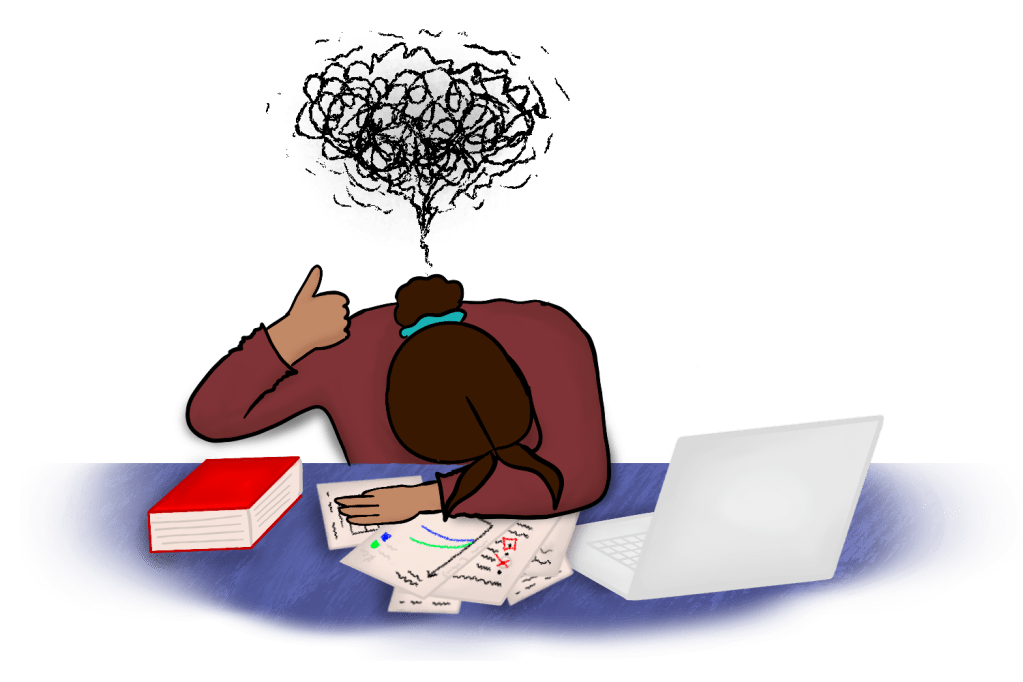
Stress, exhaustion, skipping a meal or two — these are all common symptoms of burnout in the average teenager. Burnout has increasingly become a physiological phenomenon among teens who are constantly pushing themselves toward success. According to a Bear Witness poll of 161 readers, 83% of students have experienced severe burnout.
According to the World Health Organization, burnout is an occupational phenomenon, included in the 11th Revision of the International Classification of Diseases. It is a result of unmanaged stress, leading to physical and mental exhaustion and a more negative attitude towards work.
According to the British Broadcasting Corporation (BBC), increased competition and expectation within work and school environments leads people to overwork themselves to the point of burnout.
Senior Lauren Quimby says that college expectations continue to rise every year, increasing competition for students. The feeling of needing to achieve more leads students to sign up for too many things they are unable to manage.
“Nowadays getting into college is so hard. People have to keep adding more and more things so that they look impressive,” Quimby said. “Then no one has time for anything.”
In addition to college expectations, junior Charlotte Homer says that current conditions for teens, such as anxiety and social media culture, create even more pressure on students.
“We should have so much energy in youth, and it’s really hard because burnout and all the expectations we take on and deal with are affected,” Homer said, adding that she sees burnout often in her peers, and some experience depression because of it.
According to the Office of Population Affairs, teens are experiencing emotional development that is difficult to manage in a complex environment with expectations from parents and peers.
Biology and anatomy teacher Ryan Matthews says that teens become emotionally dependent on proving their identity in school performance and social life, causing them to push themselves to the point of burnout.
“In the teenage years, you’re focusing on many different facets of life,” Matthews said. “Then everything that you’re focusing on is a really big stressor.”
According to Matthews, the increase of cortisol released in the HPA axis, the endocrine system that regulates the body’s stress response, leaves the body in constant fight or flight mode, driving a decreased appetite because of the overwhelming physical stress.
“We will actually push away fueling ourselves and will actively say, ‘I’m not hungry right now because I need to deal with this,’ because our body really can only digest when it’s in a parasympathetic state,” Matthews said.
According to the Physician Associate Foundation, a poor diet and lack of nutrients can increase the likelihood of having difficulty regulating one’s mood and lack of energy.
The physical impact of stress and lessened appetite can cause nausea and fatigue as well. Quimby mentions she drinks Red Bull often to cope with exhaustion.
“When I end up finally doing all the things that I need to get done, I’m exhausted and really sad,” Quimby said. “Sometimes I just get really dizzy or tired. I just need to sit down.”
Sophomore Maya Semeniakian recalls feeling numb and sick during burnout.
“I feel so drained, and I feel almost limp,” Semeniakin said. “I’m just tired all the time.”
Semeniakian says stress from burnout and having so much to do leads to a lack of motivation and procrastination.
“You feel so overwhelmed to the point where you just feel like you can’t do anything instead of going at it step by step,” Seminiakin said.
Similarly, Homer says burnout makes her feel mentally exhausted, making school and extracurriculars even harder.
“I feel so discouraged, and when I feel like I’m slipping or I have too many things to do, then I turn towards procrastination,” Homer said.
Additionally, Semeniakin and Quimby say they have increasingly experienced migraines as a result of stress and exhaustion, impacting their ability to focus in school. Quimby explains that her migraines have increasingly been occurring due to having multiple AP classes and extracurriculars.
“It usually happens when I get really stressed out and [I’m] not getting enough sleep [or] not eating enough,” Quimby said.
Matthews says that the causes for burnout in students, such as social pressure and outside expectations, are much different than adults. The way teens cope with burnout now forms habits that will impact them later in life. Therefore, it’s important to deal with burnout efficiently rather than continuously letting it impact the body.
“[Stressful events] take away a lot of energy from other systems,” Matthews said. “So if you’re at high levels of stress for a long period of time, that’s going to put a heavy strain on your cells because they’re constantly active.”
As the cells in the body are strained and lose energy, the immune system and its cells are weakened, decreasing the body’s ability to fight infection.
“That’s typically why a student might run themselves in the ground getting ready for finals week, and then immediately after they get sick,” Matthews said.
Like Matthews, Semeniakin expressed that getting through finals and finishing the semester is a time when burnout is the most prominent.
“At the end of the school year, I was so burnt out to the point where it was a struggle to just get out of bed. I just did not want to go to school and do any basic things,” Semeniakin said.
According to Homer, dealing with burnout requires strength and focus, and it’s important to pursue passions and actively work against the consequences of burnout despite setbacks.
“Every person is capable of achieving what they want to achieve in high school,” Homer said. “You shouldn’t feel discouraged from pursuing something just because of burnout.”
Reporting by Amelia Martorano
Illustration by Amelia Martorano


 Branham Bear Witness
Leave a comment