
Originally published in print in November 2025. View print issues here.
Injuries impact athletes more than just physically — they can affect them psychologically. According to Nebraska Medicine psychologist Andrew Ahrendt, “The more your identity is tied to being an athlete, the greater the impact.”
When student athletes who dedicate countless hours of time to their sport face a sudden injury, their usual routine is completely disrupted. They go from practicing daily, chatting in the locker room and feeling the adrenaline rush during games, to sitting on the sidelines, watching their teammates play and wishing that was them.
For many students at Branham, being an athlete means more than just playing the sport: It means being a part of the Bruin community. Once the ability to play is taken away, it can take a serious toll on students’ mental health, and they can become disconnected from their identity.
Sophomore Madilyn Murdock plays for both club and school teams for soccer and flag football. She tore her ACL in September, which has significantly altered her active lifestyle. After her surgery in November, her estimated recovery time was a year, and she has been participating in physical therapy leading up to it. Although this therapy aims to assist recovery, it can be very difficult. Murdock has been struggling with the process.
“It made me feel worse because I realized how I can’t do simple things. I can’t straighten my leg or lift it,” Murdock said. “I thought it would make me feel better, but it’s just embarrassing because I can’t do it, but I know that [physical therapy] will help me.”

Madilyn Murdock (10) plays soccer during the 2024 season.
Murdock’s coaches still want her to attend practices and games to support the team. Although this can help to keep students involved in their sport, Murdock has been struggling on the sidelines.
“You have to stand there and watch everybody do something that you love, knowing you can’t do it,” Murdock said. “And you have the fear that you’re not gonna come back 100%.”
James Vu, a senior Branham athlete, got injured at the end of his sophomore year and was out for his whole junior year when he got hurt again. He competed on the football, track and basketball teams but has returned to the football team for this fall season.
“When I first got hurt, I was like, ‘I’m probably never gonna play again,’ but [returning] made me a lot happier,” Vu said.
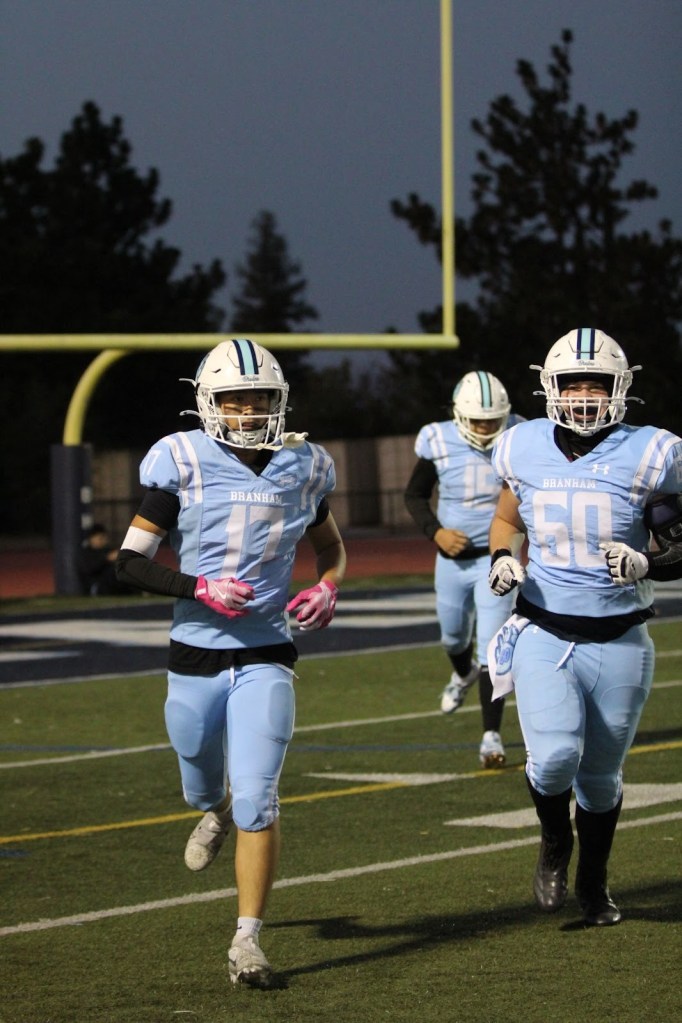
James Vu (12) plays football.
Vu was out of sports for almost two years of high school, ultimately separating himself from his form of expression and enjoyment. He admits he had a hard time sleeping and experienced a fear of missing out.
As of his junior year, Vu has suffered from a total of 5 concussions, which can impact athletes’ brains and mental state as well as cause mood swings, anxiety and irritability. To reduce further damage, Brady Och, Branham’s athletic trainer, provided Vu with advice for recovery.
“He gave me tips on what to do and what not to do. For example, like not going on my phone in the dark [is] something to help with sleep,” Vu said.
Och assists student athletes with small complications and long-term injuries in his office and on the sidelines. He also trains a small portion of students to learn physical training skills, and they help tend to injured athletes. As a trainer, Och has observed countless injuries and recognizes their psychological impact in students at Branham.
“It can be tough to see yourself in the same light that you normally would when you’re not doing that thing that you put so much time and effort into.” Och said. “It can sometimes lead to a bit of an identity crisis, and [you] have trouble figuring out what you should be doing with yourself.”
Although Och can’t entirely aid players who require surgery or outside resources, he always tries his best to bring a sense of lightheartedness to campus.
Every athlete’s recovery process is unique, but finding tools and strategies to cope can make the journey less mentally taxing. Murdock has connected with other student athletes who have been impacted by a similar injury to hers, and she says it helps to have people to relate to and who can understand her.
“Talking to [other athletes] makes me feel like I’m not the only one who’s going through this, and everybody has their own struggle,” said Murdock.
Having a strong support system can also remind athletes that there are people willing and open to helping them. Murdock has found this both on the Branham campus and at home.
“My coaches always find a way to include me now that I can’t play. They always say they’re gonna be here for me. It makes me feel loved,” Murdock said. “I think [what has helped is] everybody around me telling me that they’re gonna be here for me, and the reassurance from all my friends and family.”
Similarly to Murdock, Vu found that maintaining a sense of community provided him with strong support during his recovery. In advising other future injured athletes, he emphasizes finding ways to maintain involvement.
“Even if you are hurt, still stick with the team, still talk to your coaches, see what you can do to help out your team,” Vu said. “Emotionally supporting is better than just not being there at all. You’re not physically playing, but you’re mentally there.”

 Branham Bear Witness
Leave a comment