

Originally published in print in November 2025. View print issues here.
The Wellness Center offers many resources, such as therapists, wellness coordinators, social workers and psychologists that are readily available for students throughout the school day.
The center, which is located in the N Building, aims to provide a safe space for students where they can talk with a professional or simply take a break during the school day.
In an Instagram poll of 136 Bear Witness readers, 33% of students stated that they were unaware Branham offered these resources.
Wellness Coordinator Lashonda Eagels helps with both student and school support.
“We all need a safe space,” Eagels said. “[The Wellness Center] provides students a break away from the stressors. It provides a calming space for them, just a moment to take a break and reset.”
There are many reasons why it is beneficial for students to meet with a mental health professional, but having someone to talk to at school specifically is particularly helpful. Senior Leah Zemlerub, who visits the Wellness Center multiple times a week in addition to a therapist outside of school, relies on these resources to be successful at school.
“I didn’t have anyone that I could talk to in the middle of the day because my parents [would be] busy and I couldn’t just text my friends in the middle of class,” Zemlerub said. “I had someone to just be there.”
A study conducted by NYU found that 49% of students feel a great deal of stress on a daily basis, while 31% feel somewhat stressed. Students that are stressed while feeling a variety of other emotions may result in feeling lonely, but the services offered at the Wellness Center address these struggles.
“Having that one person on campus that you feel heard by or at least seen [by] covers a multitude. It doesn’t matter what you’re going through,” Eagels said. “[The Wellness Center] just provides that one person, at least on campus, that you can feel confident in knowing I can go to them and they will support me.”
Although visiting a mental health professional is very beneficial to students, they may be hesitant in reaching out to or approaching the Wellness Center. First year school psychologist Khalil Cury identifies reasons that students may be hesitant.
“It can be an embarrassment thing,” Cury said. “[Students] feel uncertain or unsure, or sometimes they don’t want to overly share because we are always looking into the well being of students.”
Another reason students may be hesitant to reach out to a mental health professional is because they were raised in an environment where it was normalized to keep emotions in.
“Mental health is very new in terms of being more widely accepted or at least acknowledged,” Eagels said. “A lot of education needs to happen about what mental health is and what mental illness is, and these services and just giving people a space to talk really help.”
There are many more reasons why a student may be hesitant to reach out, but confidentiality is a large factor. However, mental health professionals understand that concerns over confidentiality may cause individuals to draw back.
“Depending on what [students] share, they feel it might get reported, but at the end of the day, they do have privilege confidentiality,” Cury said. “Just know that whatever is stated within the room doesn’t leave the room unless it’s a concern.”
Zemlerub encourages others to meet with mental health professionals as it has a drastic impact.
“Don’t be hesitant,” Zemlerub said. “They want you to be there. They’re there for you. If you have the chance, you can [use the Wellness Center].”
All students are welcome to visit the Wellness Center. It’s not targeted to a specific group of students that are experiencing specific things.
“If there’s any social, emotional concerns, behavioral concerns, bullying, just anything that’s involved revolving around mental health or they feel down, [students are] more than welcome to either take a break or come check in and see one of us,” Cury said.
Checking in with a mental health professional or a trusted adult can be very relieving, especially for students.
“Being able to get my feelings out at the moment that I feel them is helpful,” Zemlerub said.
In meetings with a mental health professional, students don’t have to share if they don’t want to.
“I always tell them it’s their right if they want to share, or if they want to talk about something else, or they just want to sit in silence,” Cury said, “I normally get students to talk, but I don’t force them. I let them guide me there, and I support them.”
Additionally, Cury emphasizes the importance of letting students hear themselves first.
“At the end of the day, they already have their idea in their head. They’re going to do what they want to do,” Cury said. “So why not support and suggest in a healthy and appropriate way?”
The Wellness Center is available for students to access throughout the school day and students are encouraged to utilize its resources and acknowledge their feelings.
“We’re not robots,” Cury said. “We’re meant to feel. It’s okay to have feelings and be a human for once.”
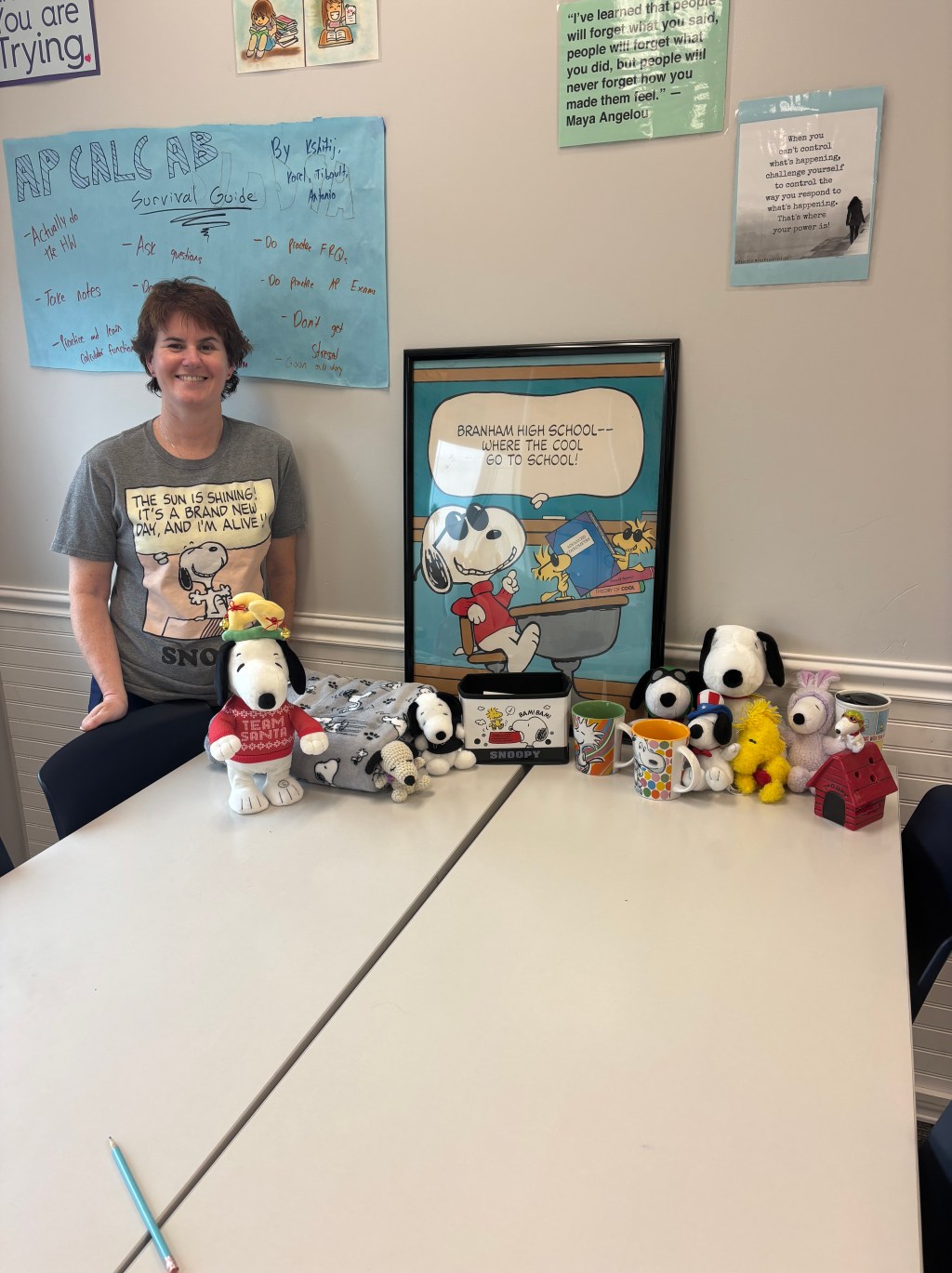
Photo by Amy Gunaseelan
 Branham Bear Witness
Leave a comment