
Originally published in print in February 2026. View print issues here.
Working with kids while still technically being a kid is a challenging but educational job that many students at Branham have taken on. Navigating interactions with children — which differ greatly from peer and adult relationships — can make a lasting impact on students’ emotional intelligence and shape their future aspirations.
Senior Jaydin Barlow Levin works at Almaden Valley Athletic Club as a “Ninja Instructor” in their NinjaZone, a program for kids that combines gymnastics, martial arts and agility skills. Barlow works mostly with younger preschool children and sometimes with kids up to second grade.
Barlow admits that adjusting her communication for different age groups, especially the youngest kids, has been a struggle.
“Very little kids don’t always understand everything that you’re telling them, so it’s been really challenging to navigate that because you have to perfect each kid’s needs and how they can best understand you,” Barlow said.
With certain kids who have a harder time focusing or listening, Barlow has to multitask and find solutions to make her classes run smoothly. Barlow finds that understanding each kid is important, especially when working with kids who have learning disabilities or neurodevelopmental disorders like ADHD.
“I’ve found out that you have to walk them through everything while simultaneously keeping an eye on other kids,” Barlow said. “Some things will work for one kid, and then some things won’t work for another, so I’ve had to really understand every kid in my class.
Senior Mars Le currently works as a math tutor at Kumon. They teach all age levels, ranging from elementary school to high school.
Similarly to Barlow, Le finds that one of the most essential skills in working with kids across different ages is knowing their individual needs. Some children require special teaching styles or additional assistance and time in order to be successful.
Le used to be a Kumon student themselves, and their personal experience has shaped their current teaching experience.
“[Tutoring at Kumon] has helped me understand kids and when they need help because a lot of the time, they don’t ask for help when they obviously do need it,” Le said. “When I used to take Kumon, I used to be too scared to ask, and I would always fall behind, but now, sometimes I don’t even ask, ‘Do you need help?’ I just go, ‘Okay, let’s go through this problem together.’”
One of Le’s favorite parts of working at Kumon is that they get to personalize their teaching style and make their own unique impact. In their opinion, Kumon is slightly lacking in explaining the “why” or reasoning behind math problems.
“But that’s also what I love about Kumon — I get to teach the kids about the ‘why?’” Le said. “When I did Kumon, I didn’t get that explanation, so I didn’t understand what I was doing.”
Senior Mia Olson is an activity worker at the Farnham Elementary School afterschool program. She is in charge of supervising the kids playing outside and indoor games and assisting them with their homework.
From her time working at an elementary school, Olson has developed her own strategies for settling conflicts.
“I’ve found that, a lot of the time, [what works] is when I tell [kids], ‘It doesn’t just hurt people around you. It hurts my feelings,’ and having them realize that their actions are hurting other people makes them automatically change,” Olson said.
Olson’s combination of lessons from her AP Psychology class and her own personal experience have taught her how to understand children’s psychology and how to personalize her communication depending on each situation.
“I’ve realized that you can’t just communicate to kids how you would communicate to [peers or adults]. You really have to understand the emotions they are going through in each situation, instead of just yelling at them because they did something wrong. In most cases, they don’t really know what’s wrong,” Olson said.
Olson is determined to continue her efforts in the classroom by becoming a teacher for elementary or secondary education, and she plans on pursuing an education major in college.
“My mom and grandma are teachers, so I grew up knowing about their jobs,” Olson said. “I’d go into her school and work, and she’d have me help with them, so that inspired me and [made me realize] ‘Oh, I actually like doing this.’”
Although Le doesn’t aspire to become a teacher, they plan on becoming a nurse, and working with kids has inspired them to be a pediatric nurse.
So far, Barlow believes she has grown many important traits as a result of the lessons she has learned from working with children.
“I’ve definitely become more empathetic and more understanding,” Barlow said. “It’s also made me a more patient person. That’s something I used to struggle with until I started working with kids.”
Even though Barlow doesn’t have her exact career path planned out yet, she knows working with kids is something she can always fall back on because she genuinely enjoys it and wants to make a meaningful impact on kids’ lives.
“I love the excitement of kids when they learn something new, how proud I feel over my kids that I coach and how proud they feel of themselves. I love to see their achievements,” Barlow said. “I don’t want to be that type of coach or teacher that makes them feel bad for making a mistake.”
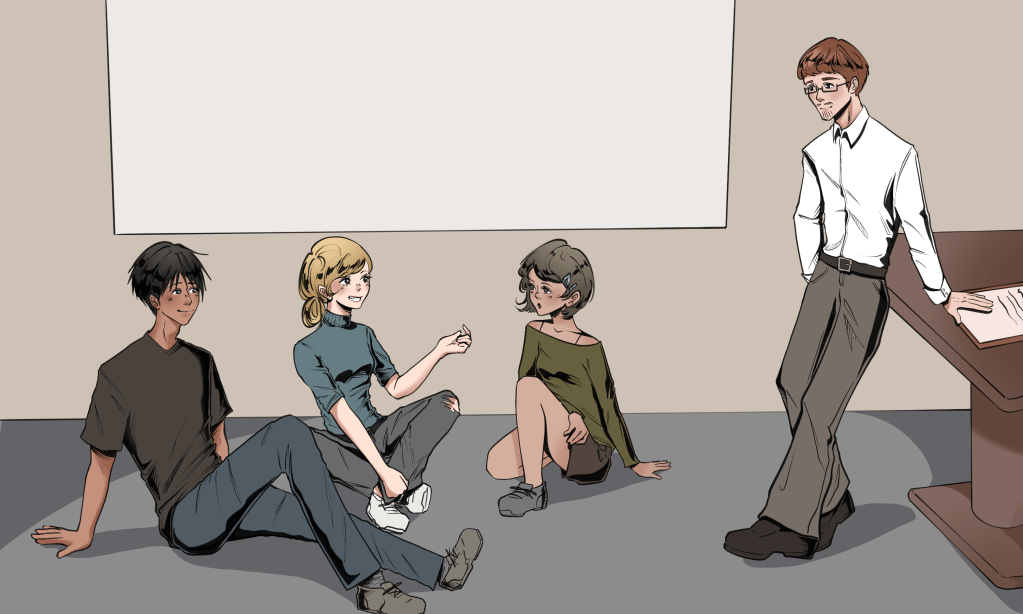
Illustration by Grace Ngo/Special to Bear Witness
 Branham Bear Witness
Leave a comment