
Originally published in print in February 2026. View print issues here.
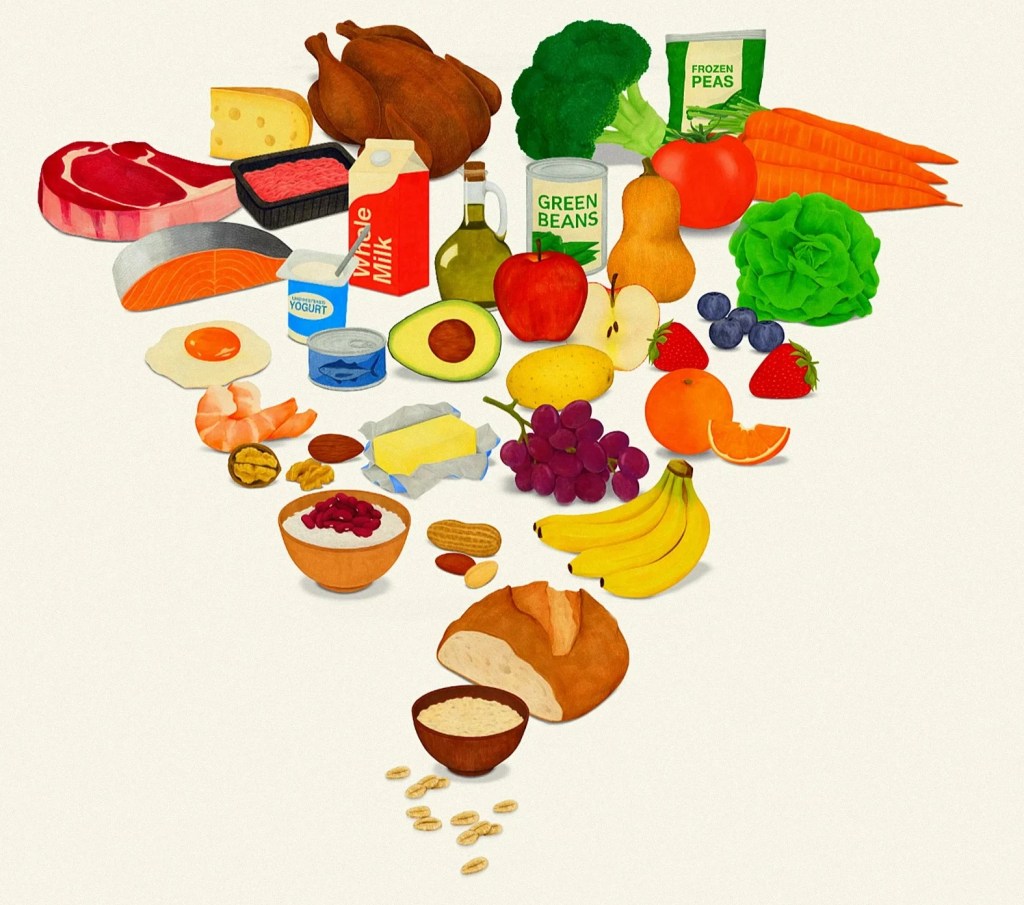
On Jan. 7, U.S. Department of Health and Human Services Secretary Robert F. Kennedy Jr. released new Dietary Guidelines via the U.S. Department of Agriculture (USDA), replacing the previous MyPlate guidelines. These guidelines were accompanied by an inverted, or upside-down, food pyramid and a focus on increasing the intake of whole foods and decreasing the intake of highly processed foods.
Biology and Anatomy/Physiology teacher Ryan Matthews agrees with many of the focuses in the new guidelines, but he also believes that there is room for improvement within the food pyramid.
“What it doesn’t do a great job of [is explaining] how much people should be consuming.” Matthews said. “That’s one area that I definitely think that they can build on. What types of fats? How much fat?”
These new guidelines were met with a mixture of praise and backlash, with supporters stating that the focus on “real food” will be good for overall health.
Critics argue that an emphasis on foods high in saturated fats, like red meats, butter and beef tallow, will be harmful to the health of America, according to The Nutrition Source from the Harvard T.H. Chan School of Public Health.
One of the most notable changes from MyPlate to the new inverted food pyramid is the shift from the five food groups displayed in a plate format to specific food recommendations that are roughly grouped into different areas within the pyramid. The new guidelines also specify grains as whole grains and feature the addition of the “healthy fats” to progress the administration’s focus on whole foods.
The USDA has used a variety of food guides in the past, with the earliest one dating back to 1916, according to the USDA Food and Nutrition Service. Throughout the years, the format – whether pyramid or not – has changed, along with the number of food groups and the style in which the guidelines are presented.
“These Guidelines [in the inverted food pyramid] return us to the basics,” RFK Jr. said in a press release in January. “American households must prioritize whole, nutrient-dense foods…and dramatically reduce highly processed foods. This is how we Make America Healthy Again.”
Food guidelines are updated by the USDA every five years, and RFK Jr.’s Dietary Guidelines will be in place until 2030. The pros and cons of the guidelines maintain a widespread desire for constant improvement when it comes to the health of Americans.
Foods teacher Debbie Gorton explains that, when teaching her classes, she uses the MyPlate food guide as an example for students because it is simpler and easier to understand than the new inverted pyramid. While the pyramid has various food suggestions, MyPlate maintains a more portion-based plan. Gorton shares a similar opinion to Matthews, noting both the pros and the cons of the updated guidelines.
“I think it starts good conversations, especially about cutting back on processed foods,” Gorton said. “But it oversimplifies nutrition and can be confusing for students.”
Senior Maximiliano Haman agreed that the inverted food pyramid can be confusing for students because it’s not as straightforward as MyPlate, which focused on portion and customization. Still, Haman noticed improvements in the food arrangements.
“Bread and butter is mainly in the [lower] tier, which is a good view of it because foods that have a lot of carbs [aren’t] usually something you want to eat a lot of,” Haman said.
Gorton said that teaching students nutrition literacy and how to achieve and maintain a balanced diet is more important than following one specific model or set of guidelines. She explained that the hands-on approach of cooking allows students to learn about nutrition as they go.
“In class, students actually cook and taste the food, so nutrition becomes something they experience, not just something they read about,” Gorton said.
Food Guidelines have implications for schools and individuals alike, and teachers and students explain the necessity for these government guidelines to be comprehensive.
“People need to know how to balance their meals because right now we’re relying on them to figure that out,” Matthews said. “I like MyPlate for how it is organized, and I like how this [inverted] pyramid is trying to [help people] understand processed foods and move to a more organic diet.”


 Branham Bear Witness
Leave a comment