
Originally published in print in May 2026. View print issues here.
Immigration enforcement debates are ongoing throughout California, but local advocates in the Bay Area are considering establishing “ICE-Free zones” to reduce ICE involvement on public property. The zones would enable residents to reach schools, parks, and community services without fear of arrest.
Local advocates say ICE-Free zones would create designated public spaces where immigration enforcement activity is limited in order to protect residents accessing essential services. Proposed locations include schools, libraries, parks, health clinics and community centers. Supporters argue that these areas would help immigrants feel safer without any fear.
While ICE-Free zones can’t legally prevent federal agents from enforcing immigration law, advocates say that the zones would rely on policies that limit cooperation between city agencies and immigration. In many cases, staff members working in these spaces would receive training on how to respond if ICE agents appear, including verifying warrants and protecting confidential information.
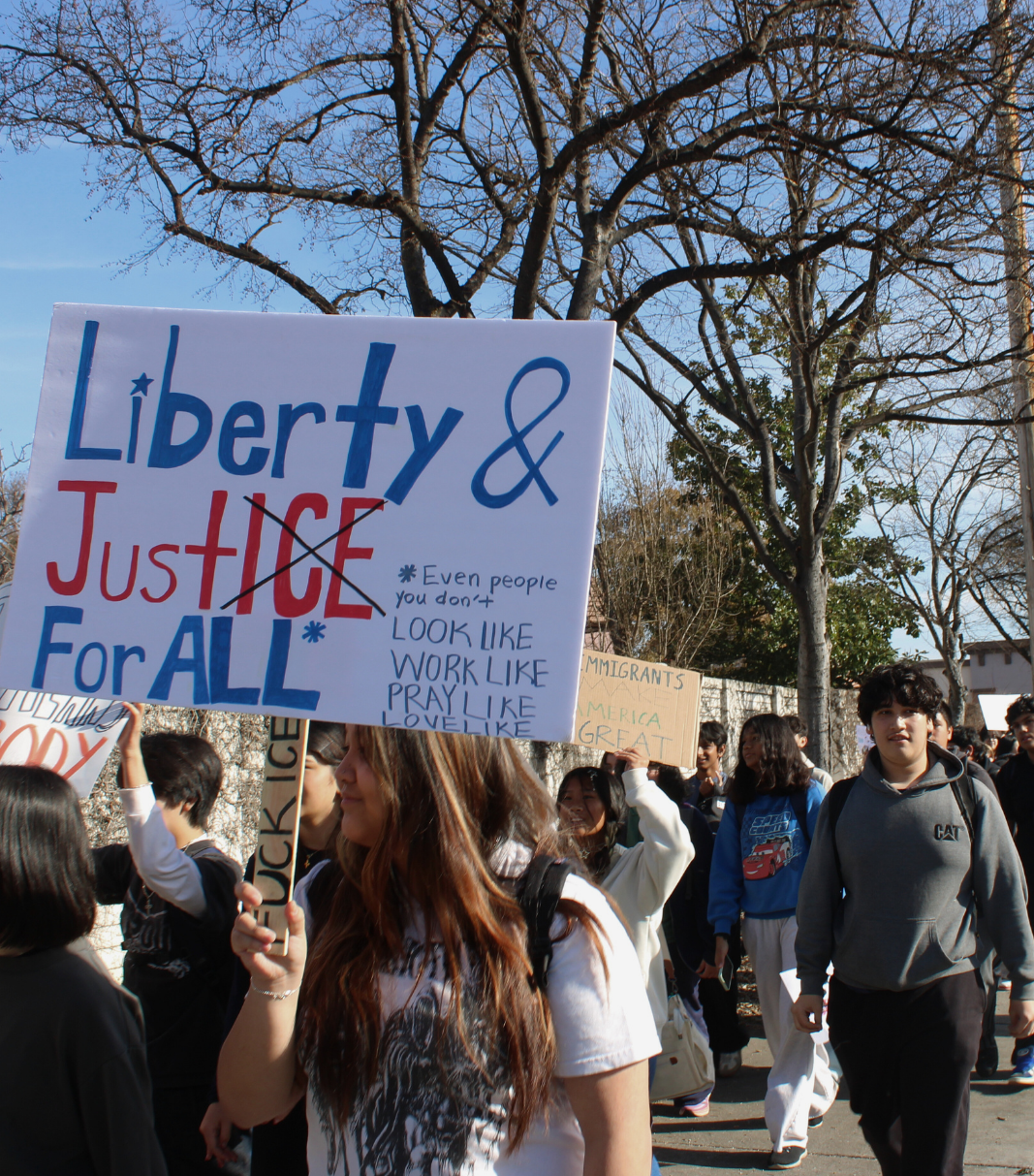
At Branham, students joined the ICE walk-out protest on January 30, which was organized by senior Aesa Medower and other ASB executive board members. She wanted to create an outlet for students who felt strongly about the issue but did not know how to speak up.
“As a high school student, I think it can often feel kind of hopeless watching the news or hearing about things going on in our country when most of us aren’t even old enough to vote yet,” Medower said. “I had heard so many classmates and friends expressing how they wanted to speak up…but they didn’t know how or where to start.”
Medower believes Branham’s diverse campus community influenced her perspective on immigration issues and the importance of making students feel safe and represented. She describes what ICE-Free zones mean to her personally.
“I strongly believe that everyone should be able to safely access essential services without feeling threatened by federal law enforcement,” Medower said. “I think it sends a really important message to immigrant families in our community that we want them to feel safe in public spaces.”
Working alongside students and staff during discussions surrounding immigration concerns, Community Liaison Beatriz Espinoza believes schools play an important role in ensuring that families feel safe and informed.
“The most important piece I play as a community liaison is the protection of student data and safety,” Espinoza said. “I was provided training directly from the superintendent to protect student information and prevent ICE access to school grounds without a warrant.”
Many immigrant families worry about the accessibility of personal information and the possibility of immigration enforcement near schools. Espinoza mentioned that the staff members are trained on how to respond if agents appear on campus and are expected to follow district guidance carefully.
According to Espinoza, the misinformation surrounding immigration enforcement proves to be a challenge.
“The most common misconception is identifying local law enforcement officers and Immigration and Customs Enforcement,” Espinoza said. “There’s a difference in authority, so it’s important to educate our community on how they differ.”
Espinoza mentioned that families are also seeking resources that provide information about their legal rights and that allow residents to report ICE activity in Santa Clara County, such as the Immigrant Legal Resource Center, a non-profit that provides immigrant communities with “Know Your Rights” materials, legal education, and multilingual red cards that help residents understand how to respond to ICE activity.
“Red cards are designed for community members in Santa Clara County to report ICE activity, but they also include ‘Know Your Rights’ scripts that are available in multiple languages,” Espinoza said.
Sophomore Sumin Park, who attended the ICE walkout, said immigration issues resonate with many teenagers because of their own families’ experiences.
“My parents were immigrants, and the thought of them being taken by ICE, or being discriminated [against] by ICE, is definitely a terrifying thought,” Park said. “A lot of our parents, especially in the Bay Area, are immigrants, so it should matter to us as students.”
Still, Park also questioned whether immigration enforcement could simply shift its focus to surrounding areas outside the designated zones.
“I get the proposal, but how do they know that it’ll actually work?” Park said.
Espinoza said she hopes schools become more proactive in supporting students affected by immigration concerns.
“There are only a handful of staff members on this large campus that have resources and direct support for these students in need,” Espinoza said.
Medower acknowledged that one protest alone would not change national policy, but said student activism can still help raise awareness and encourage discussion.
“It’s really important that we continue to speak up for things we care about,” Medower said. “I hope the protest could play a small part in building that momentum of civil activism.”
Photos by Emmett Spear/Bear Witness



Leave a Reply