
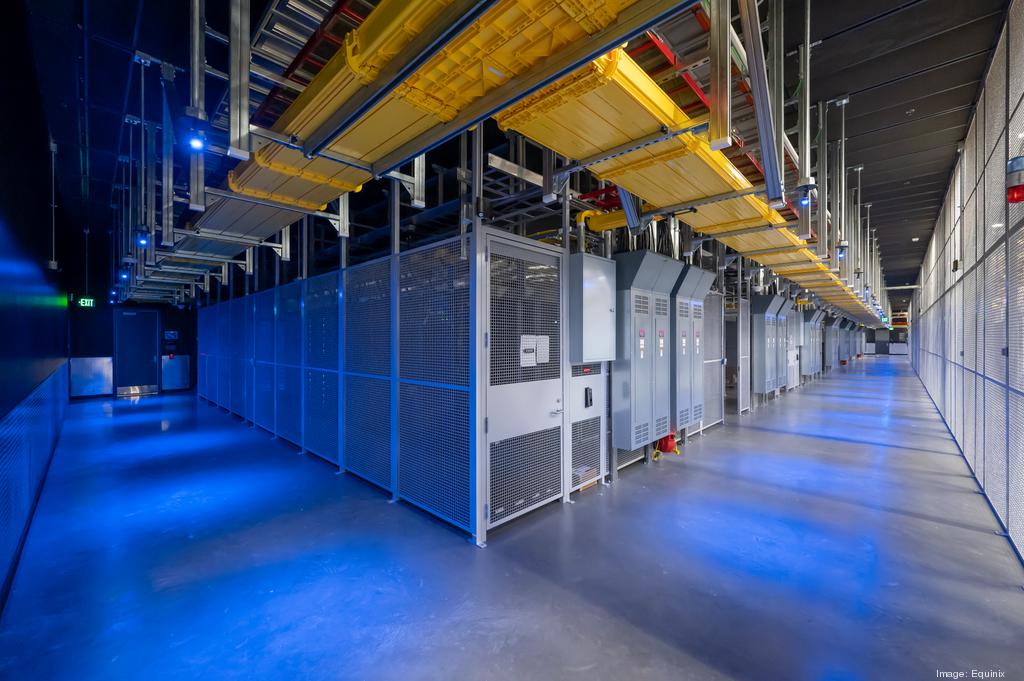
Data centers—the buildings that house the computers powering everything from AI to the Bear Witness website—are popping up across the country.
In San Jose, four data centers, totaling over 1.5 million square feet, have been requested for approval from July to September 2026. This is an increase from 2025, which had a single application totaling 500,000 square feet. Computer science teacher Steven Turner explained the uses of data centers.
“Data centers in general need to exist,” Turner said. “Otherwise, we have no cloud. [But] not all data centers are for AI. We’ve had Google Drive and Google Maps and other things on the cloud for years. It’s just that now the growth is caused by the AI boom.”
Junior computer science student Ryan Wang studies the implementation of these data centers. Wang studies computer information systems — the interaction between software and the hardware it is run on. While he sees AI as a useful tool, Wang questions the companies behind it.
“The problem is, [AI companies want] to make more money, so they keep on investing in new technology that will get less and less flashy in the public’s eyes,” Wang said. “And at some point—in my personal opinion—AI will face a pretty massive downfall.”
These companies include Prologis, a real estate and logistics company with the most data center applications in San Jose as of September 2026.
Pushback comes from consumers such as senior computer science student Pranav Ganesh, who projects the price of computer parts to keep rising as data center construction increases the demand for critical components, including RAM, a computer’s short-term memory.
“RAM [prices] in general will probably shoot up…because computers use RAM to get any type of generative [AI] response,” Ganesh said. “I’m estimating about 50 to 150% over the next three years.”
The increase Ganesh predicts is on top of the 50% to 100% price increase computer processors have seen from September 2025 to September 2026.
With the amount of energy it takes to power these data centers, AP US History and business marketing teacher Christopher Mock is concerned about the strain it will place on the US electrical grid.
Mock also believes that the financial burden of improving the electrical grid is being forcibly shared by local citizens who don’t get anything in return.
“It has been shown that a lot of [data centers] around the country have led to a lot of people in the area paying way higher rates for their electricity,” Mock said. “There’s also concerns around us not being able to produce enough renewable or green energy to power these, [so] we’re having to then go back to relying on fossil fuels to provide the power.”
Turner also commented on the downsides of building data centers in a city as developed as San Jose.
“Sound is a big [concern],” Turner said. “There’s a reason why we have businesses near airports and not homes. Directly next to an airport is extremely loud and can be bad for the health of people. Same thing with data centers.”
Wang views these complaints about data centers as reflective of the sentiment shared by many communities: that the investment in AI is not representative of people’s needs. Local governments approve these buildings for the tax revenue they will bring to the city or state from the increase in business.
“It’s probably going to rake in a lot of money for taxes and also these billionaires, which is probably why they were approved in the first place,” Wang said. “Otherwise, I see no apparent reason. However, the main impact that [local residents will] see would probably be exploding utility prices. Which, especially for electricity, is not a good thing to see.”
High water usage is a prevalent public concern. However, new technologies such as closed-loop cooling — which recycles the same water to cool computers with minimal waste — could make the problem all but obsolete.
The Prologis website claims that “Closed-loop cooling systems use roughly the same amount of water per building each day as a single car wash.” If implemented, this technology could substantially reduce environmental impact.
Regarding utility prices, President Donald Trump expanded the Ratepayer Protection Pledge on July 23, 2026, including data centers in the optional agreement.
According to the White House website, “Under the Pledge, large data center operators — not ratepayers — fund the electricity generation and infrastructure their projects require.” Prologis signed the pledge on Aug. 10, 2026.
While the Ratepayer Protection Pledge is nothing more than a voluntary agreement with no legal binding, it is a reflection of the sentiment held by the American public. And to big public companies, that perception has impacts on a financial level.
Mock is skeptical about the potential benefits from building these centers. But until new data centers are built in the Bay Area, the impact on San Jose remains to be seen as technology advances in response to public backlash.
“Right now, uncertainty is the biggest thing,” Mock said. “And understandably, a lot of people are [asking], ‘Am I gonna benefit from this, or is this company gonna benefit from this?’”
Image from Silicon Valley Business Journal

Leave a Reply