
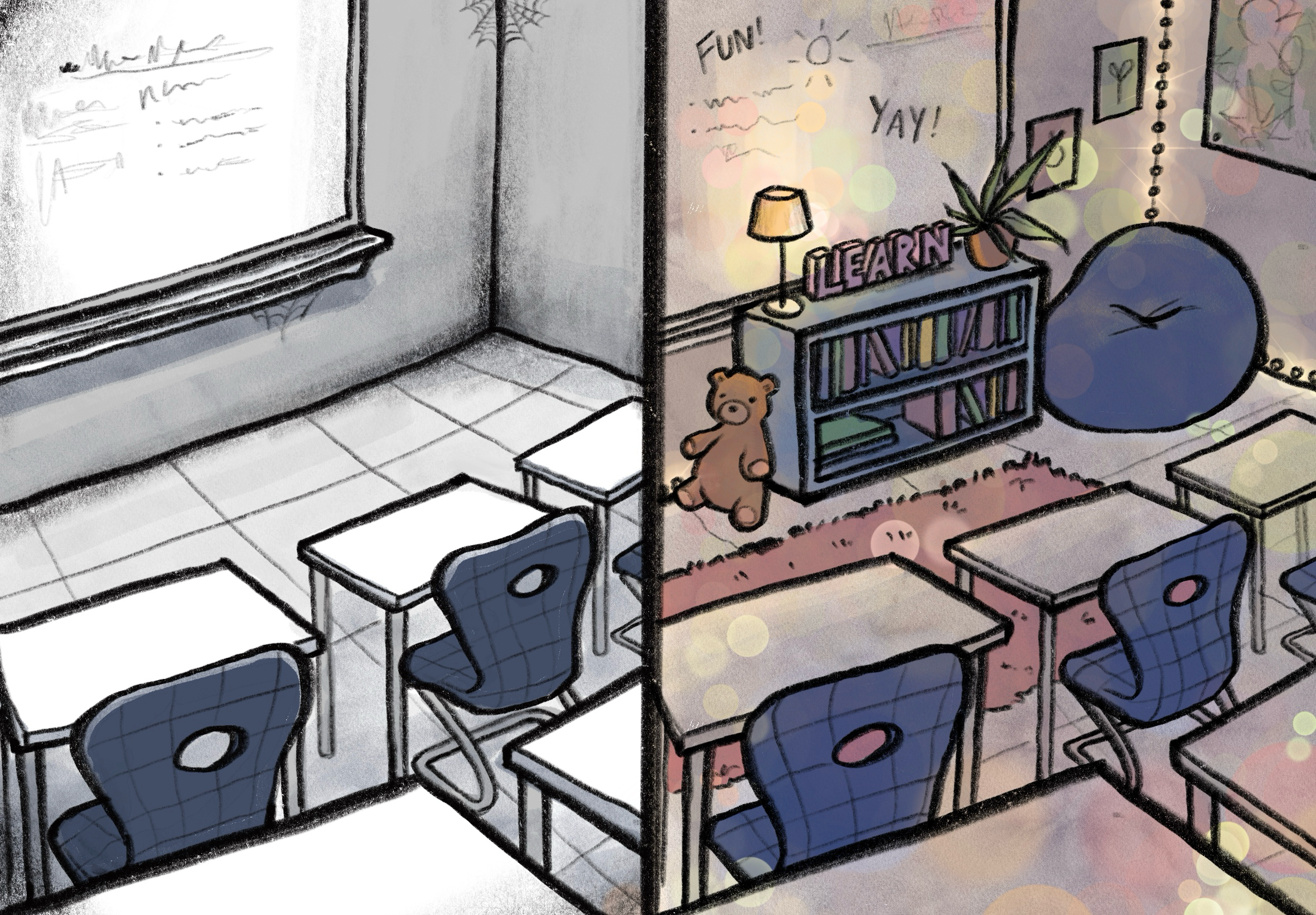
Blank walls, identical desks and limited personal touches can make a classroom feel less like a place to learn and more like an empty box.
At Branham, limits on classroom customization leave students and teachers with few opportunities to create learning spaces that feel personal, comforting and welcoming. These restrictions should be changed to allow classrooms to include more personal touches and comfortable features that help students feel more welcomed.
Branham is continuing to restrict classroom customization by forcing teachers to remove classroom decor, leaving students and teachers with learning spaces that feel plain, impersonal and disconnected from the people who spend hours in them each day. Some decorations and furniture have been deemed as fire hazards, forcing teachers to remove personal touches. For teachers, these items often served as a personal touch that reflected on their personalities, interests and teaching styles.
According to research from American Public University, an online university based in West Virginia, examines how personalized learning environments can help create more engaging and flexible learning experiences for students. Educators who use personalized learning have reported increased attendance, higher standardized test scores, better student engagement and lower dropout rates.
Research suggests that the physical environment of a classroom can have a meaningful impact on student learning. According to a 2015 study by researchers at the University of Salford, led by Peter Barrett, classroom designs had a 16% impact on the learning rate of 3,766 students across 153 classrooms. The study identified factors such as ownership, flexibility, complexity and color elements that can influence students’ learning. Ownership refers to students feeling that the classroom is a space they belong to, which can be encouraged by displaying their work or allowing them to contribute to the classroom environment. Flexibility is how easily a classroom can be changed to support different activities, such as arranging desks for group or individual work. Complexity means having enough visual variety and detail to make a classroom interesting without becoming distracting, while color can influence the overall atmosphere of the space.
Students spend hours every day inside classrooms, making the environment around them more important than it may initially seem. A classroom doesn’t need to be overly decorated, but some fun colors and personal touches can make the space more inviting for students.
Personalization can make classrooms feel more welcoming, but while teachers may display student work or use posters to add personality to their classrooms, restrictions on decoration and furniture can limit how they create their ideal learning environment.
According to the San Jose Fire Department’s Educational Facilities guidelines, artwork and teaching materials cannot exceed 20% of the wall area in buildings without an approved automatic sprinkler system. The guidelines also require fire access roads and exits to remain free of obstacles, meaning furniture cannot be places where it could interfere with evacuations. These guidelines are based on the California Fire Code, California Building Code, and local San Jose codes. These restrictions show how fire safety requirements can limit the types and placement of furniture and decorations teachers can use to make their classroom more comfortable.
Researchers in the 2015 study also found that classroom design factors, including complexity, can influence students’ learning progress. Complexity refers to the amount of variety of visual elements in a classroom, such as decorations, colors and displays. A classroom’s design is more than decoration, as the way a learning space is arranged can be connected to students’ learning experiences.
Creating a more welcoming classroom does not mean sacrificing organization or creating distractions.
Branham should give their teachers reasonable freedom to personalize their classrooms while still maintaining an appropriate learning environment. This could include allowing teachers to choose classroom colors, add comforting furniture and display decorative items. Giving teachers more freedom can create welcoming learning environments while still following school safety rules and maintaining organization.
Branham should bring more identity and life into their classrooms because it can capture students’ attention, create a stronger sense of belonging and encourage them to become more engaged in their learning.
Since the environment around students can influence their engagement and academic success, creating classrooms with personality and comfort should not be treated as unimportant, but rather a priority.
Illustration by Alex Solbeck/Special to Bear Witness



Leave a Reply